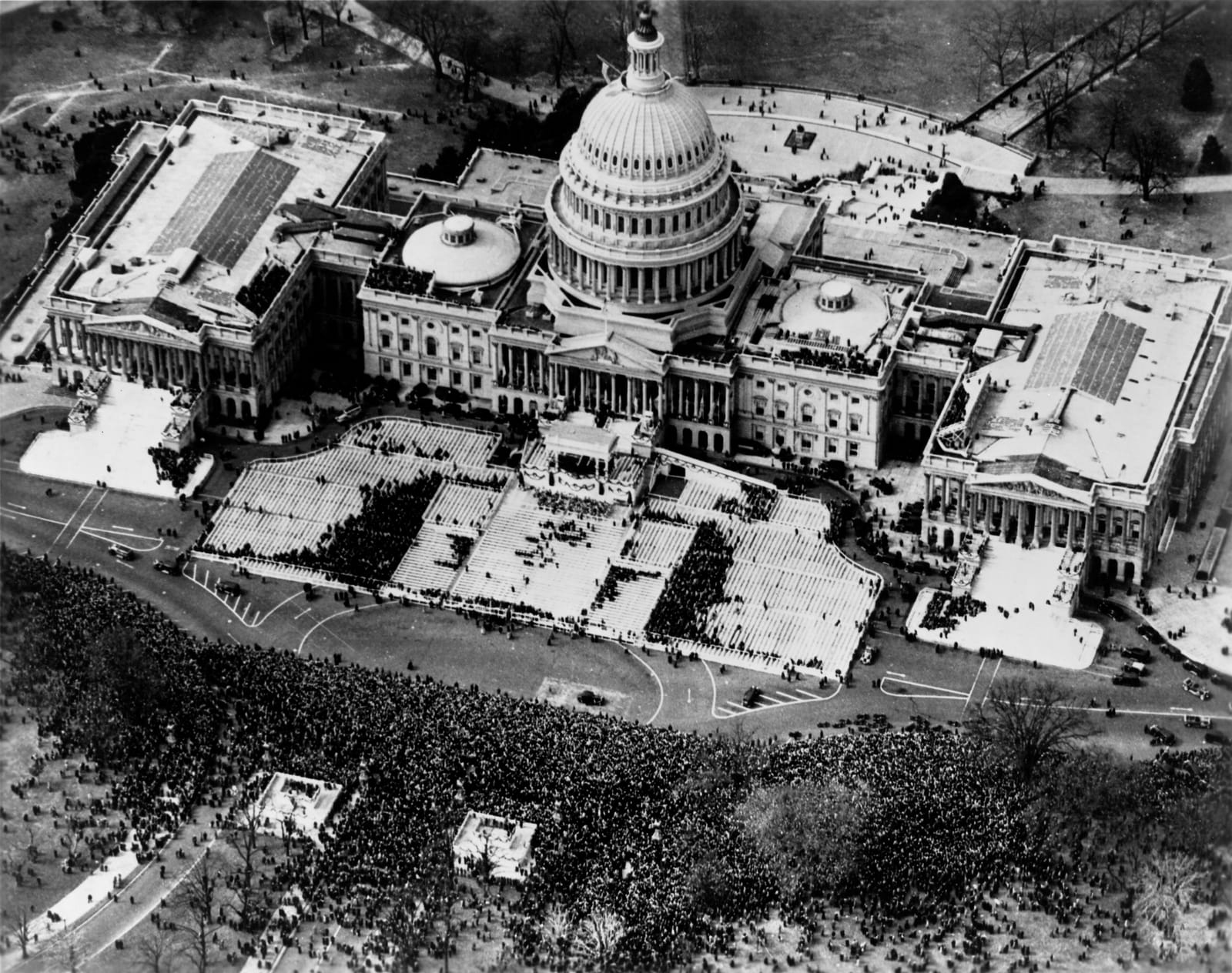
Franklin D. Roosevelt said “the only thing we have to fear is fear itself” in his first inaugural address on March 4, 1933. He was addressing the Great Depression and the paralyzing effect of fear—not claiming that Americans faced no real problems.
The speaker, speech and date
The line belongs to Franklin D. Roosevelt’s first inaugural address, delivered on March 4, 1933. The National Archives provides the speech’s original document pages and historical context.
the only thing we have to fear is fear itself
Franklin D. Roosevelt, first inaugural address, March 4, 1933
“Who said it?” therefore has a clear answer for this famous use. That answer should not be inflated into a claim that Roosevelt was the first person in history to connect fear with fear itself. Documenting a particular speech and proving an idea has no precedents are different tasks.
Why the Depression context matters
The Archives describes an address that confronted both the psychology of the Great Depression and the question of what government could do. Roosevelt wanted action in response to the emergency. The memorable sentence about fear was part of that larger argument.
Read this way, the line is not a denial of economic hardship. Its target is the kind of terror that leaves people unable to respond to hardship. In our reading, the distinction is between a real problem and an emotional reaction that makes addressing the problem still harder.
There was a political argument behind the reassurance
The speech also discussed Roosevelt’s willingness to seek broad executive power if necessary. As the Archives explains, the address helped justify the federal response he envisioned. Reducing it to a reassuring slogan removes that political purpose.
That does not mean the sentence cannot speak to other situations. It means a new use is an adaptation. If you place the words on a poster about an examination, a performance or a personal challenge, it is worth knowing that their original audience was facing a national economic emergency.
How to quote it responsibly
Use the speech title and date with the attribution: “Franklin D. Roosevelt, first inaugural address, March 4, 1933.” For an essay, follow the Archives link to the document rather than citing an unattributed image found in search results.
A good quotation citation gives the next reader a way back into the original. Here that means keeping the economic and governmental context within reach, even when you quote only the short, memorable clause.