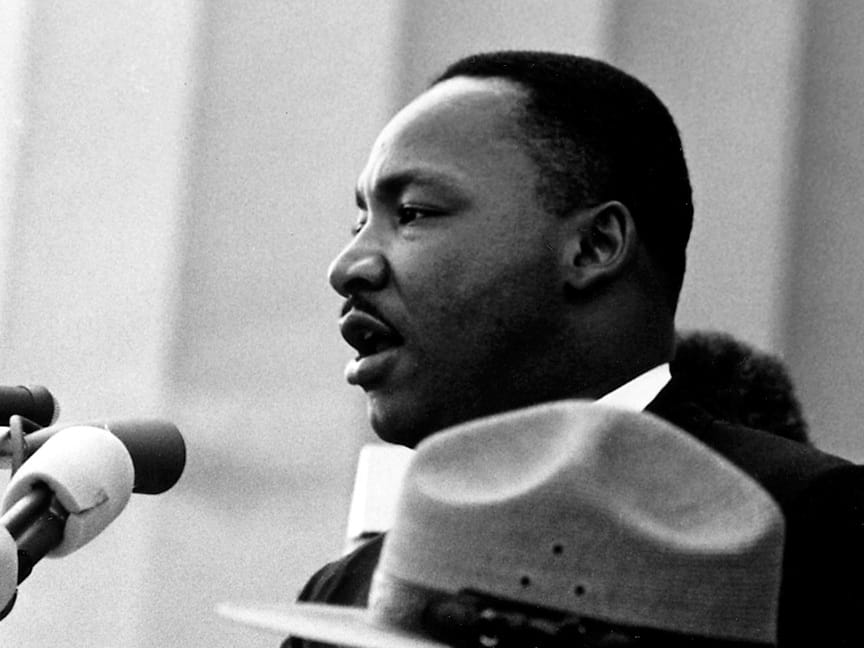
Martin Luther King Jr. delivered the famous “I Have a Dream” speech at the March on Washington for Jobs and Freedom on August 28, 1963. The speech’s vision of equality drew on themes and language he had developed in earlier addresses.
The famous speech was King’s
The speaker was Martin Luther King Jr., and the occasion was the August 28, 1963 March on Washington for Jobs and Freedom. The King Institute at Stanford documents the speech and its development.
That is the answer when someone asks about the famous address. It is a narrower claim than saying King invented the ordinary English phrase itself. The historically useful attribution names the speech and occasion.
The words had a history before Washington
King had used related material in earlier sermons and speeches, including an address in Detroit two months before the march. Stanford’s account explains that his Washington delivery moved away from the prepared manuscript and drew on language he had used before.
Calling that moment an improvisation should not suggest that its ideas appeared from nowhere. There is a difference between departing from written notes and having no preparation or earlier material to draw upon.
The march was about jobs and freedom
The Institute’s history of the march places the address within a broader civil rights demonstration. Its full name is useful context: economic opportunity and freedom were connected concerns, not separate decorative themes.
As an interpretation, reading the speech only as advice to follow a personal dream shrinks its public argument. A statement about equal citizenship, discrimination and a country’s obligations is not interchangeable with a slogan about individual ambition.
A useful way to cite and read it
Use the speaker’s name, speech title, event and date. Then follow a source that distinguishes the prepared text from the delivered address and explains the earlier material. That approach helps you understand both the historical occasion and the craft of a speech.
For a presentation, one productive question is: what changes when you keep the event’s words “Jobs and Freedom” in the attribution? It encourages a discussion about the public demands surrounding the speech, rather than treating its most familiar phrase as a complete summary.
This article identifies and discusses the address; it does not reproduce the speech. Follow the source records for the fuller historical account.